
Mediation

Mediation-Bonn-NRW-OnlinePhoto: Karoline Caesar

In deadlocked situations, people talk to each other differently if they ask a third person to moderate the conversation. Behind opposing positions there is usually a deeper, more hidden issue, the understanding of which is the key to finding a solution. The mediator's special "language" makes it possible to gently make this more transparent.

Thanks to our intensive training as mediators, we are able to get to the bottom of the most important causes in just a few hours and, building on this, take the first steps towards a solution. My job is to ensure a fair discussion that is far better than a dispute and in which you don't have to relive the bad experience. I will get you talking in the right order and with the right wording so that you can take a better look at the situation and relax internally. My approach focuses on identifying interests and needs as well as the dynamics of the interaction. I use systemic approaches for this. Mediation can take 2-5 appointments or longer.
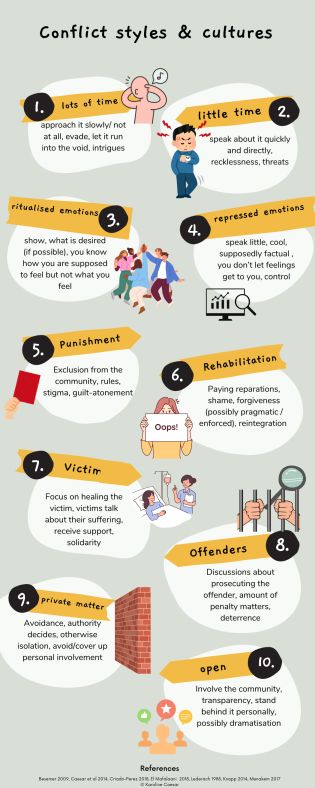
Infographic: Karoline Caesar - high-resolution graphic for download

Mediation process

When dealing with conflicts, you want to feel that you’re in good hands—so here’s some information about the mediation process and the general framework. If you have any further questions, please feel free to contact me! An initial consultation is always free and non-binding.
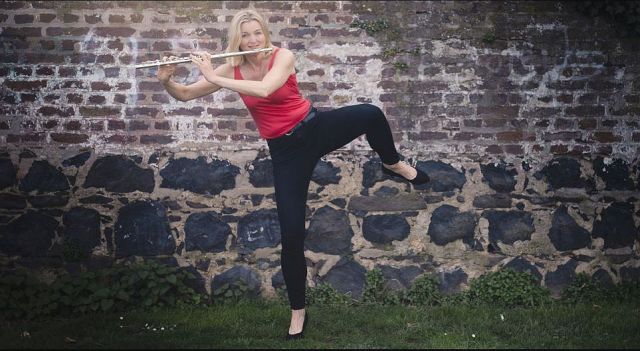
Mediator-Karoline-Caesar-BonnFoto: Stefan Wiede

Free initial consultation

FAQ Mediation

How does it all start?


During an initial consultation, we’ll determine the parameters for the mediation. A phone call is sufficient, or we can schedule a Zoom call: Is your case suitable for mediation? Who is truly interested in mediation? Who will pay for and initiate it, and who will be involved...? Ideally, you should already know that the other party is also interested, as the role of the mediator is not to try to convince them. If the case involves a client who is not personally involved in the conflict - for example, an employer paying for a team - we will assess whether the principles of voluntary participation and confidentiality can be upheld to the extent possible. Only then can mediation be effective. We will then schedule an initial meeting with the parties involved in the conflict.

Does my entire team have to participate in coaching, or is it enough for me, as a manager, to learn how to be a better intermediator?


If, as a manager, you focus on strengthening your own conflict-resolution skills rather than immediately involving the entire team, you’re not a bad manager—you’re being smart. You’re investing in something you can use time and again—and in doing so, you’ll be helping many employees. The basics of mediation can be learned through coaching. If a situation has escalated significantly or the manager is personally involved, coaching can actually be even more effective. If all else fails, you can always opt for mediation. Or you can work with individual team members who are authorized to speak on behalf of the others or who are primarily involved in the issue.

What is the difference between an intercultural misunderstanding and a real conflict?


A conflict is usually more emotionally noticeable—it takes a greater toll. A cultural misunderstanding can be a combination of irritation and fascination. When both sides view their interests as incompatible, it takes on an entirely different dimension—because then they are heading toward conflict. Cultural misunderstandings sometimes give rise to internal conflicts—one person thinks he or she must adapt or tries their hardest to resolve the conflict, but the other side doesn’t get the message. That’s why, especially as a leader in intercultural collaboration, you should hold one-on-one conversations, ask good questions, observe carefully, and distinguish between culture and the individual.

We work with suppliers in Asia, Eastern Europe, and Latin America—can mediation even help?


Change processes—such as the introduction of sustainability standards across entire supply chains—present particular challenges in international collaboration that should be professionally managed to save time and costs. Regulations vary by continent; frequent staff turnover hinders the development of trusting relationships; distance complicates communication—and on top of that, there may be completely different contexts and, consequently, differing interpretations and meanings of behaviour. Mediation is a process that is culturally compatible; particularly on the continents mentioned above, a safe space for jointly discussing conflicts is one of the prerequisites for people to speak more openly. As a mediator, I communicate in a culturally appropriate manner, and I am familiar with contexts, regulations, and the implementation of government guidelines; therefore, I can effectively ensure that win-win-solutions are achieved with suppliers.

Is such a process binding?


To ensure that mediation is effective, after the initial consultation we agree on the number of sessions and draw up a mediation agreement of about one page, which is signed. So, yes, it is binding. But of course, participation is voluntary, and you can withdraw from the process at any time.

What do you do to ensure we can communicate despite tensions?


Good question! First, I ensure fairness, for example by allocating exactly equal speaking time, which I make sure everyone adheres to. Second, you speak with me first; the other person(s) sits/sit in on the conversation and listens. I will listen to you with empathy, and those who aren’t speaking can take notes so they don’t forget what they want to say about the points raised. There’s also the option of one-on-one conversations. In addition, I use various techniques to support you and to gradually bring you into conversation with one another.

What happens if someone doesn’t follow the principles or rules?


As a mediator, I guide the process in a structured manner, interrupting and summarizing, asking questions, and making it as easy as possible for the participants - so that such a situation doesn’t arise in the first place. The mediator may also interrupt at any time to remind participants of the rules, which can be forgotten during a heated discussion. Furthermore, the principle of voluntariness ensures that anyone can withdraw from the process at any time - including the mediator herself.

What do you do to ensure you remain truly impartial?


For one thing, I have developed an understanding of conflict through my education, training, and experience, which means not looking for someone to blame, but instead examining the complexity of the causes and accepting each individual person. This does not mean agreeing with everyone, but approaching every perspective with understanding. Using my analytical and communication tools, I maintain a professional distance and can help reveal a different level of the conflict, which, in the best-case scenario, can lead to a turning point. I also reflect on the mediations in supervision or intervision groups to gather professional opinions from third parties and receive feedback.

How do you ensure that the agreed-upon outcomes are implemented at the end of mediation?


This is the responsibility of the parties involved in the conflict—BUT... there is assistance available. In addition to an action plan that the parties can develop together at the end, there is the option of a written, legally binding agreement that can be filed with a lawyer or notary. Another option is a follow-up meeting.

What differentiates mediation from other conversations

Listening-during-mediation-is-deeperPhoto: RosZie, Pixabay

“You always repeat so much of what we say!” I often hear — mediation delves quite deeply into the conversation and, unlike other methods, slows down the pace and works more thoroughly. A mediator questions, probes, senses, takes another look, cares, makes sure everyone is well, and follows every word and every glance. So that you feel: “I'm okay even during a conflict. Even if the other side finds me difficult.” And the other side hears you too, but in a completely different atmosphere.

Ultimately, it comes down to you—I'm known, whenever possible, for efficient processes—getting to the heart of the matter clearly and, at times, taking a pragmatic approach.

I’m sometimes moved when parties in conflict actually value each other, even in the midst of a dispute. That’s when real, lasting progress is made.

Legal basics can be found in the German mediation law, the associated legislative decree (both in German) and at the Bundesverband Mediation website.